- Home
- Resources
- Products
- Contact Us
- Agents

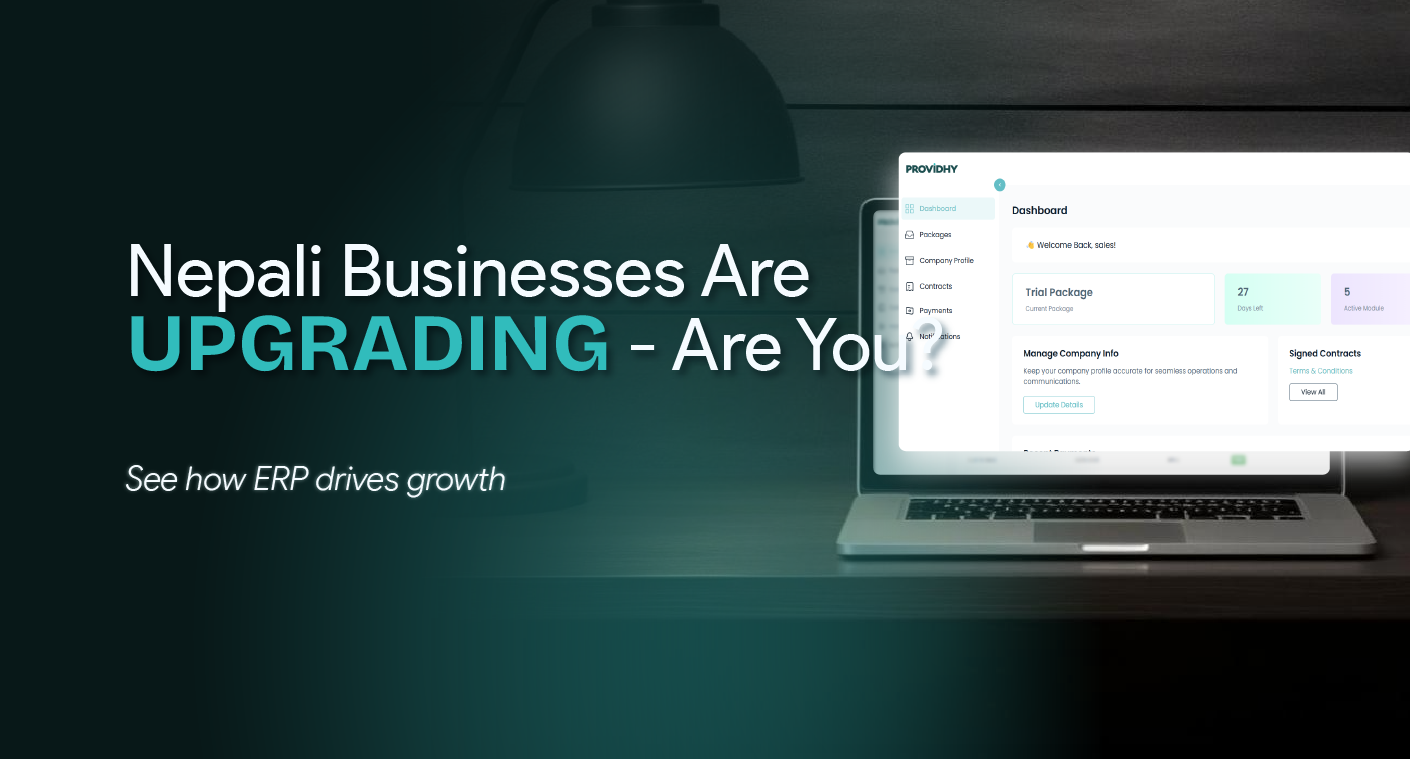
 Providhy
In today’s competitive business landscape, using an enterprise resource planning (ERP) system is no longer a luxury but an absolute need for businesses in Nepal aiming to grow and stay at the top.
With seamless integration of various business functionality, from accounting and inventory to sales and purchases, in one place, ERP systems are now changing the way businesses operate. While traditional methods have always been the norm for businesses in Nepal, ERP systems, with their promising benefits, are slowly reshaping the Nepali business scenario.
So, in this blog post, let us find out the top 7 benefits of ERP systems that are helping businesses in Nepal transform, scale, and grow.
An enterprise resource planning (ERP) system is a type of software solution that helps businesses manage and streamline every aspect of business processes through the seamless integration of multiple core functions. It centralizes data, ensuring a smooth flow of information and transparency across all business functions.
Here are seven powerful benefits that an ERP system offers to businesses in Nepal, helping them achieve what matters the most: Growth.
With an ERP system implementation, you can bid farewell to time-consuming traditional manual methods like a ledger or spreadsheet-based business.
Accurate and complete reporting is the backbone of every business's growth. An ERP system automates the reporting process of every operation, including the most critical financial reports.
An ERP system has a centralized platform for managing finances, enabling you to track your business’s financial health and generate accurate reports that aid in making strategic decisions.
Managing inventory manually is a hassle, especially for businesses that deal with large volumes of goods, as even minor errors lead to hefty losses.
With cloud-based ERP systems, you no longer have to worry about investing in costly hardware to safeguard and maintain data security.
The cloud-based ERP system allows you to access and manage your business operations anytime, anywhere, using the Internet. So, unlike traditional on-premise systems, it ensures your business runs effortlessly, no matter where you are.
In this age of data, an ERP system provides accurate, real-time data in one place, allowing you to make data-driven decisions for your business.
Additionally, they offer data centralization, meaning all departments of your business have proper access to consistent and accurate information. This, in turn, allows you to identify trends, address challenges, and seize growth opportunities effectively.
Unlike the international business landscape, Nepali businesses often face unique challenges raised by inefficient, traditional management processes. However, the competition and customer expectations continued to increase over the years.
To stay competitive in today’s fast-evolving market, the need for efficient and effective management processes has reached an all-time high for businesses.
That’s where ERP systems are proving their worth by streamlining operations, improving decision-making, and enhancing overall efficiency. With real-time data, automation, and integration of business functionalities, ERP has been helping companies overcome challenges and focus on growth.
While any business can benefit from better organization, certain sectors see a massive and immediate return on investment from implementing an ERP.
While the benefits of ERP systems are clear, it’s crucial to find the right solution that fits your unique business needs is crucial, as off-the-shelf ERP solutions often do not offer customization to align with your business nature. But that’s where Providhy ERP comes in.
Providhy ERP is tailored to help businesses streamline operations, improve efficiency, and make data-driven decisions—all on a single platform. Unlike traditional ERP systems, Providhy ERP adapts seamlessly to the unique needs of Nepali businesses, eliminating limits on transactions, server maintenance, and data handling.
Find out how Providhy ERP can streamline your operations and drive growth. Let’s build a smarter, more efficient future together. Contact us today for a free consultation!
An ERP System (Enterprise Resource Planning) is a single, integrated software that manages and connects a company's core functions, such as accounting, inventory, and sales. Businesses in Nepal use ERP systems to reduce manual work, improve coordination between departments, and maintain accurate financial and operational records that meet government compliance standards.
Using an ERP system brings several advantages. It helps businesses make informed decisions through centralized data, improves the accuracy of financial reports, and allows real-time tracking of inventory and sales. It also reduces paperwork, minimizes human error, ensures tax compliance, and increases overall productivity and efficiency.
ERP systems are useful for almost any growing business in Nepal. Trading companies, manufacturers, wholesalers, retailers, hotels, restaurants, construction firms, and educational institutions can all benefit. Even small and medium-sized enterprises find ERP systems valuable as they expand and require better control over daily operations.
For most companies, cloud-based ERP is a better choice because it is affordable, requires no heavy hardware investment, and allows access to business data from anywhere with an internet connection. It also includes automatic updates and data backups. However, companies with strict data security policies or poor internet connectivity may still prefer an on-premise setup.
The cost depends on the size of the business, the number of users, and the type of deployment. Cloud-based ERP systems typically cost between NPR 3,000 and 10,000 per user per month, while on-premise systems may range from NPR 2 to 10 lakhs for setup, with additional maintenance costs. Many Nepali ERP providers offer flexible pricing tailored to business needs.
Yes, most ERP systems in Nepal are designed to comply with local tax laws. They automatically calculate VAT, generate PAN invoices, and produce reports ready for submission to the Inland Revenue Department (IRD), helping businesses stay compliant and avoid penalties.
Yes, ERP systems can track stock levels, sales, and purchases instantly. This gives business owners a clear view of what’s in stock, what’s running low, and when to reorder, reducing shortages and overstocking.
Modern ERP systems are built to be simple and intuitive. Most Nepali providers offer training and customer support to ensure that even non-technical users can operate them comfortably. Once implemented, an ERP system actually makes managing a business easier by automating repetitive tasks and improving organization.
Discover how Providhy can streamline operations and empower your growth.
Start Your Trial Now